

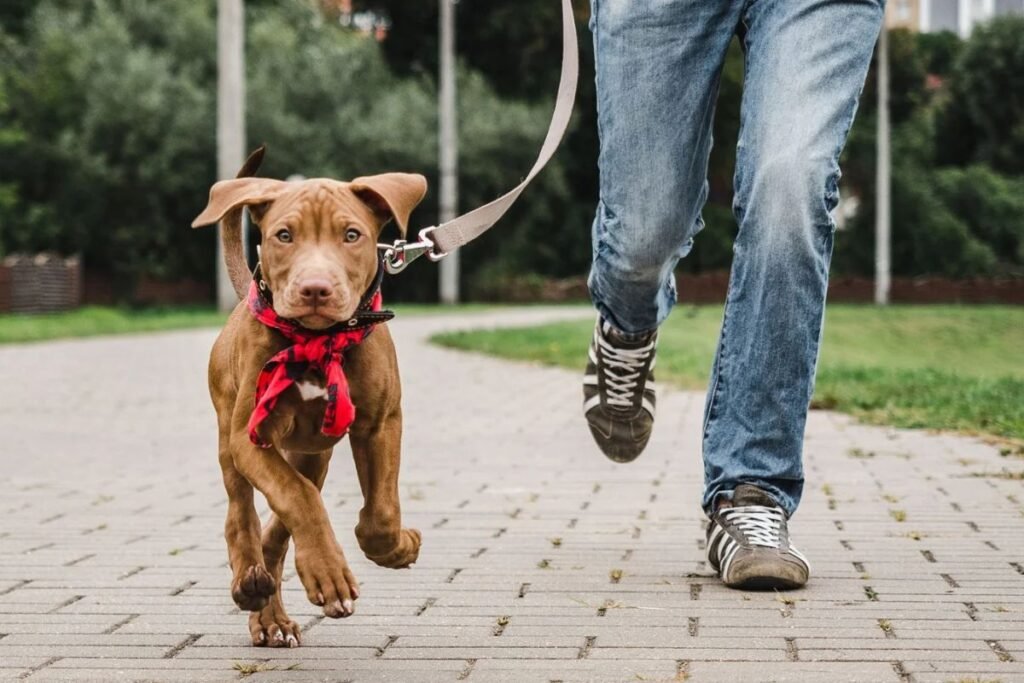
Let’s clear something up right away: prong collars aren’t cruel. What is cruel? Letting your dog drag you down the street while you both get more and more frustrated.
If you want a calmer walk, faster results, and clearer communication with your dog – yes, even your puppy – a prong collar can absolutely help. When used correctly, it’s one of the most effective and humane tools out there for leash training.
In this post, we’ll walk through:
Need a step-by-step guide?
☞ Grab the free Puppy Prong Collar Starter Kit

The Dog Training Industry Is Full Of Myths And Misinformation
There’s a ton of noise online about prong collars being abusive, outdated, or harmful. And look – we get it. If all you’ve ever seen are memes and horror stories, of course you’d hesitate.
But here’s the truth:
A properly fitted prong collar is one of the most effective and humane tools for leash training—period. They’re built in a way that works with your dog’s instincts, not against them.
This isn’t about “dominating” your dog. It’s about creating clear boundaries and calm communication.

So… How Young Is Too Young?
If your puppy is big enough to pull, they’re big enough to learn not to.
I recommend introducing the prong collar as soon as your puppy starts to pull – usually around the time they begin exploring a little more confidently. At that age, it’s not about correction. It’s just a clear, gentle way to show them where the end of the leash is.
Some trainers wait until 5-6 months, but by then, most dogs have already built a habit of pulling.
It’s much easier – and safer – for both of you to start early and teach leash skills from day one.
You’re not “correcting a baby.” You’re helping your puppy understand:
“Leash tight = stop. Leash loose = good job, keep going.”
Why It Works (No, It’s Not Because It Hurts)
The prong collar works because it creates pressure-and-release feedback.
That’s it. That’s the entire conversation.
Dogs don’t need yelling or yanking. They need feedback that makes sense in dog language.
Don’t Forget The Praise!
We’re not saying ditch the positive reinforcement. Far from it.
Use food or praise to reward the moment they stop pulling. This speeds things up and builds a strong association between loose leash walking and good stuff.
But praise without structure? That’s just noise.
Structure without reward? That’s a power struggle.
You need both.

Still Unsure?
Here’s the deal: If your puppy is already pulling or ignoring the leash, waiting won’t fix it. Teaching leash boundaries early is easier than fixing a pulling habit later.
If your puppy is lunging, reactive, panicked, or too frantic for simple leash work, book a Behavior Clarity Call. I’ll help you figure out the right next step.
Thanks for reading.
Now go walk your dog like the boss you are.